

FTL shipping becomes cheaper and faster for Amazon sellers only when a prep center removes fragmentation from inbound flow, stabilizes freight execution, and reduces per-unit Amazon penalties tied to placement and compliance.
If a prep center allows you to ship fewer, denser, more compliant loads into Amazon’s network, the savings usually outweigh prep fees. If it does not, FTL often looks efficient on paper but costs more in practice.
What “FTL” Really Means in Amazon Terms
Full Truckload is not a speed guarantee. For Amazon, FTL is simply a freight shipment that requires an appointment, follows strict carrier rules, and enters the network as a palletized load.
Amazon treats LTL and FTL similarly at check-in, with the same intolerance for labeling errors, pallet defects, or missed appointments under Amazon Seller Central inbound policies.
What matters is not the trailer size but how cleanly the shipment enters Amazon’s system. A full trailer that misses an appointment or fails compliance is slower and more expensive than a well-built LTL load.
Why Prep Centers Change FTL Economics
A prep center does not make freight cheaper by magic. It changes three structural variables that dominate Amazon’s inbound cost and speed.

1. Density and consolidation
Most sellers do not generate full pallets naturally. Inventory arrives in parcels from multiple suppliers, at different times, with mixed SKUs and inconsistent packaging. Shipping that directly to Amazon keeps the flow fragmented.
A prep center aggregates those inputs into:
- standardized cartons
- Amazon-compliant pallets
- predictable shipment sizes
This turns dozens of small shipments into one planned freight move. That single change often cuts cost per unit more than negotiating carrier rates ever will.
2. Compliance risk reduction
Amazon freight penalties are not subtle. A single missing pallet label or incorrect carton content can trigger:
- load refusal
- forced rework
- detention and redelivery charges
- delayed receiving that cascades into stockouts
Prep centers exist in that compliance layer. Their value is not speed alone, but predictability.
3. Middle-mile positioning
Where inventory enters Amazon’s network affects both cost and transit reliability. Prep centers located closer to common Amazon intake regions shorten linehaul distance and reduce appointment variability. This matters more than sellers expect, especially when Amazon assigns distant fulfillment centers.
FBM Logistics Quietly Overlap With FTL Strategy
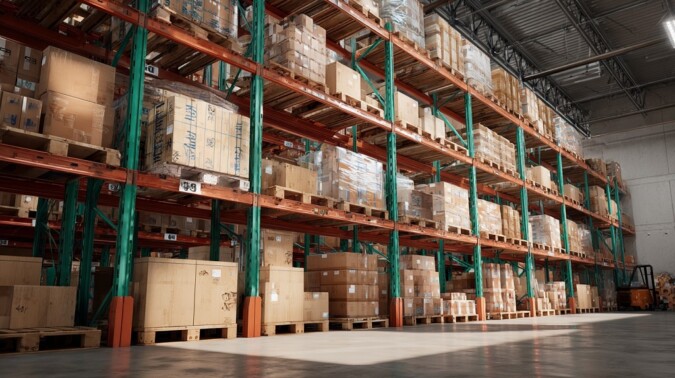
This is the point many sellers miss. FTL decisions are rarely isolated to FBA alone. Sellers running hybrid models often move inventory through FBM first, then replenish FBA in larger, more controlled waves. In that setup, the same consolidation logic applies.
An experienced FBM prep center becomes part of the freight optimization layer, not just a fulfillment service. Inventory can be received from multiple suppliers, checked, prepped, stored short-term, and then released either to FBM orders or consolidated into palletized freight when volumes justify FTL.
This matters because it removes urgency from inbound decisions. Instead of rushing partial loads to Amazon or paying parcel rates to stay in stock, sellers can let inventory accumulate, measure true demand, and then move it in a single, dense freight shipment. The result is fewer inbound events, better trailer utilization, and lower cost volatility across both FBM and FBA operations.
The Fee That Often Decides Everything: Inbound Placement
Amazon’s inbound placement service fee changed the FTL equation for many sellers. The fee is per unit, varies by size tier and routing choice, and applies when sellers choose fewer inbound destinations than Amazon prefers.
This creates a paradox:
- Sellers want FTL because they want one destination
- Amazon may charge per unit for that simplicity
A prep center helps only if it allows you to optimize shipment creation, not just transport. Sellers who ignore this fee often misjudge FTL savings by thousands of dollars per shipment.
How placement fees interact with FTL
| Scenario | What happens | Result |
| Direct FTL, minimal split | Amazon applies a per-unit placement fee | Transport looks cheap, landed cost spikes |
| Direct SPD or LTL | No placement fee, but higher transport cost | More predictable but slower |
| Prep center → optimized FTL | Lower transport and controlled placement exposure | Lowest total landed cost when done right |
The key is that placement fees scale with units, not pallets. A prep center that helps you choose the right inbound option can save more than it costs.
When a prep center actually makes FTL cheaper
FTL is cheaper with a prep center when at least three of the following are true.
| Cost signal | Why it matters |
| Multiple suppliers per week | Consolidation opportunity is real |
| Mostly parcel inbound today | You are paying for fragmentation |
| Inconsistent dock access | Accessorial charges inflate freight |
| Frequent compliance issues | Rework costs dwarf prep fees |
| High inbound placement fees | Shipment design matters more than rates |
| Long, variable FC assignments | Middle-mile positioning reduces volatility |
A common tipping point appears around 8–12 pallets. Below that, FTL rarely performs as advertised. Above 20 pallets, FTL economics become stable, but only if compliance is tight.
When a prep center makes FTL faster

Speed in Amazon inbound is not transit time. It is time to available inventory.
Prep centers improve that metric in three ways.
Fewer decision points
Instead of coordinating multiple suppliers, labels, and shipment plans, the seller manages one outbound event. Fewer handoffs mean fewer delays.
Cleaner Amazon check-in
Amazon receiving is unforgiving. Prep centers that ship daily understand pallet height limits, label placement, and carton build rules. That reduces check-in delays that do not show up in transit estimates.
Better appointment reliability
Carriers that regularly service Amazon lanes perform better than one-off bookings. Prep centers with volume history benefit from that reliability.
The Biggest Misconception Sellers Make About FTL
FTL does not guarantee one Amazon building.
Amazon may still split inventory virtually or physically, depending on network demand. Sellers confuse:
- transport mode (one truck)
- inventory distribution (one FC vs many)
Understanding that difference prevents unrealistic expectations and bad cost forecasts.
How AWD Fits Into the Picture
Amazon Warehousing and Distribution changes where inventory enters the system and how it flows afterward. For some sellers, AWD combined with a prep center replaces repeated FTL shipments with fewer, larger, more controlled moves.
AWD is not cheaper by default, but it can:
- smooth inbound spikesReducee emergency shipments
- Stabilize replenishment cadence
Prep centers often act as the staging layer that makes AWD usable at scale.
Side-By-Side Cost Logic
Below is a simplified comparison that reflects real decision pressure, not marketing promises.
| Model | Transport cost | Amazon fees | Risk | Speed to availability |
| Direct SPD | High per unit | Low | Low | Medium |
| Direct LTL | Medium | Medium | Medium | Medium |
| Direct FTL | Low per unit | High if misplanned | High | Unstable |
| Prep center → FTL | Lowest when optimized | Managed | Low | Fastest in practice |
The prep center does not win because it is cheaper at every line item. It wins because it controls variance, and variance is expensive in Amazon operations.
A Practical Decision Rule

A prep center makes FTL cheaper and faster when it:
- reduces the number of inbound shipments
- increases pallet utilization
- lowers Amazon placement or compliance penalties
- shortens the average time from receipt to availability
If it only adds a stop without improving those variables, it increases cost.
Bottom Line
FTL shipping is not an upgrade. It is a tool. A prep center turns that tool into a system.
For Amazon sellers dealing with fragmented supply, unpredictable FC assignments, and per-unit penalties, the prep center is often the difference between theoretical savings and real savings.