
A T-shirt featuring your favorite television character sounds like a perfectly innocent project. You find a picture, add a funny quote, print it on a shirt and wear it to your next watch party.
Problems can begin when you decide to sell a few copies. Television networks and production companies own valuable rights to their shows, and merchandise is an important part of that business.
Drawing a character yourself or changing the colors of a famous logo does not automatically give you permission to sell it.
Fortunately, fans have plenty of room to create original clothing inspired by the television genres they love. The trick is knowing which elements are protected, where original artwork makes a difference and when permission is necessary.
What Can You Actually Put on a Fan T-Shirt?
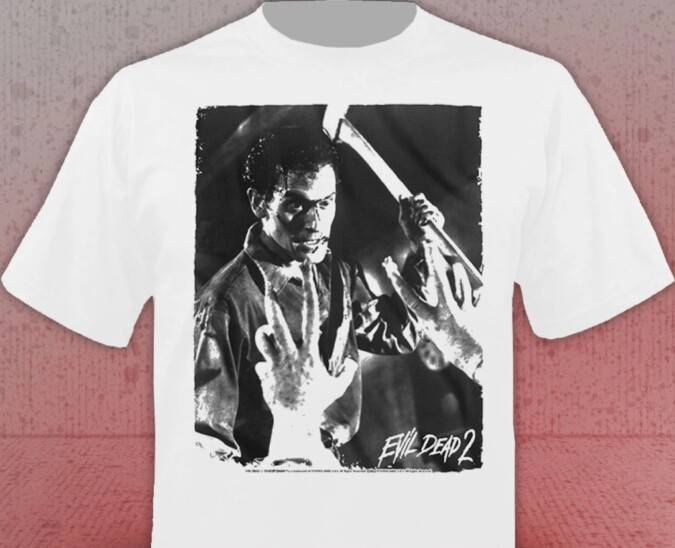
Television shows contain several kinds of intellectual property. Screen images, original illustrations and many recognizable character designs can receive copyright protection. Show titles, logos and certain slogans can also receive trademark protection.
The U.S. Copyright Office explains that copyright protects original creative expression rather than general ideas.
That difference gives fans useful creative freedom. You can design a shirt celebrating detective stories, supernatural mysteries or science fiction without copying the artwork belonging to a specific television production.
None of the examples guarantees a legal outcome. The details of the artwork, its use and the applicable laws determine the actual risk.
Make Merchandise Inspired by a Genre Instead of Copying a Show
Imagine wanting to create merchandise for people who love supernatural television dramas.
The obvious approach is printing a photograph of a famous cast or reproducing a recognizable symbol. Both can create legal problems if the necessary rights are missing.
A more interesting project could be an original illustration of a haunted motel, complete with your own fictional name and a wonderfully suspicious vacancy sign.
Fans who enjoy the genre will recognize the humor without needing an official television logo.
The same approach works for other kinds of shows.
- Crime dramas. Create an original detective agency logo, fictional case number or humorous evidence label.
- Science fiction. Design your own spacecraft, planet map or imaginary research organization.
- Medical dramas. Use an original illustration of a hospital coffee cup with a joke about surviving another night shift.
- Reality television. Make shirts celebrating dramatic elimination ceremonies, alliances or exaggerated confessionals without copying show branding.
- Fantasy series. Invent a fictional kingdom, original family crest or mythical creature.
The designs should have their own creative identity. Changing the name of a famous fictional school by one letter or redrawing a recognizable spaceship is unlikely to solve the underlying problem.
Can You Use Famous TV Quotes on T-Shirts?
A memorable television quote can seem like the easiest merchandise idea. Some lines are so recognizable that fans can identify the show immediately.
However, the legal position is more complicated than counting words.
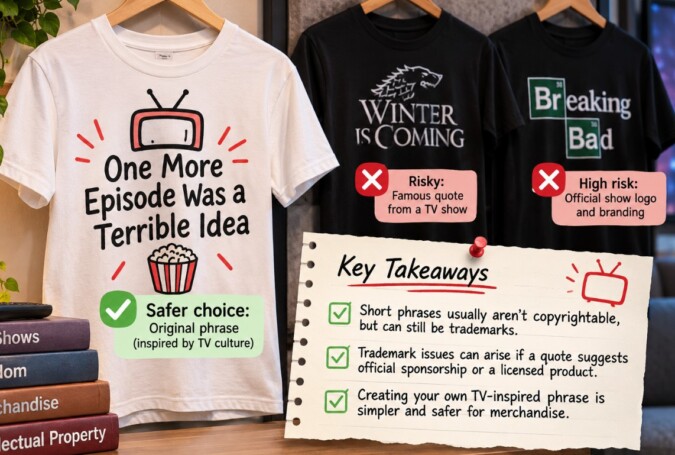
The Copyright Office explains that individual names, titles and short phrases generally do not receive copyright protection. Certain phrases can still receive trademark protection, particularly when used to identify merchandise or a commercial brand.
A familiar catchphrase might therefore create a trademark problem even if the words themselves are too short for copyright protection.
The U.S. Patent and Trademark Office identifies consumer confusion about the source or sponsorship of products as a central concern in trademark infringement.
For example, using an official show logo alongside a famous quote could make buyers believe that a shirt is licensed merchandise.
Writing your own joke about television is considerably simpler.
A shirt reading “One More Episode Was a Terrible Idea” can appeal to almost anyone who has watched a season finale at two in the morning. An original phrase still deserves a trademark check before commercial use.
Does Fair Use Protect Fan Art?
Some artists assume that changing an image sufficiently makes it legal to sell. Others believe that adding a disclaimer or donating part of the profit solves the problem.
Neither assumption provides automatic protection.
Under U.S. law, fair use depends on four factors, including the purpose of the use, the nature of the original work, the amount copied and the potential effect on the market.
Parody, criticism and commentary can sometimes qualify for fair use. Selling a shirt with a popular character simply because people love that character presents a different legal question.
A genuinely critical design commenting on a television show may have a stronger argument than an ordinary decorative image. However, commercial use and the possibility of replacing licensed merchandise can weigh against fair use.
The Copyright Office also explains that changing another work does not automatically create an independent right to reproduce or sell it.
Making one shirt for personal use also does not create a blanket copyright exemption, even though commercial distribution introduces additional concerns.
How to Create Your Own Fan Merchandise at Home
Once you have an original design, the actual production is fairly straightforward.
For a first project, consider creating a fictional detective agency shirt. You could use an original magnifying glass illustration, a made-up agency name and a short humorous slogan.
Prepare the Artwork
Create the design using software that supports high-resolution artwork. Vector graphics are useful for lettering and simple illustrations because they can be resized without losing sharpness.
Choose fonts and graphics that permit your intended use. Some free downloads allow personal projects but restrict commercial merchandise.
If you commission an illustrator, agree in writing on the rights you need. Paying for artwork does not automatically transfer its copyright to you, as the Copyright Office explains.
Choose a Printing Method
Heat transfer vinyl is suitable for simple letters and shapes. Detailed illustrations containing many colors are easier to reproduce using professionally prepared DTF transfers.
For regular production, people searching for a tshirt printing machine should know that a heat press applies prepared designs to garments, whereas a printer produces the artwork on transfer material.
A heat press provides controlled temperature and pressure for compatible transfers. A household iron can handle certain vinyl projects, but consistent results become harder with large designs.
Follow the transfer manufacturer instructions for temperature, pressing time and peeling. Test the artwork on an inexpensive shirt before producing several copies.
Make a Sample Before Producing More
Wear and wash the sample. Check the print edges, fabric comfort and placement.
A large plastic-like graphic might look fantastic in a photograph but feel uncomfortable across the chest. Smaller artwork can give a better result, particularly on lightweight cotton shirts.
For a television watch party, matching shirts with different fictional job titles can be entertaining. You might print “Chief Plot Twist Investigator” on one and “Department of Suspicious Endings” on another.
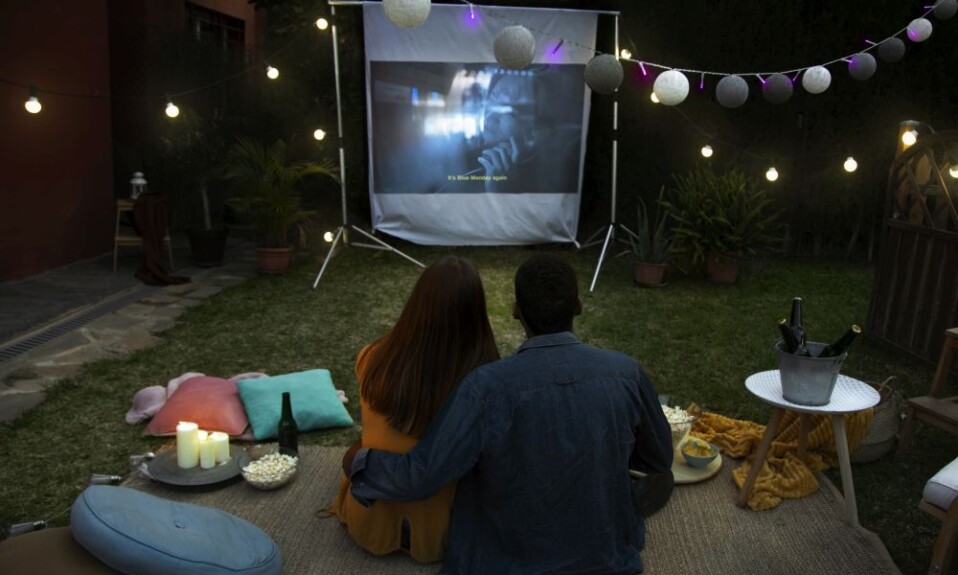
Matching shirts also work for an outdoor movie night at home, especially when the artwork celebrates the event itself rather than reproducing a protected television design.
What If You Want to Use an Actual TV Character or Logo?
Permission is the most reliable route when the design depends on protected material belonging to a television production.
Find out who controls the merchandise rights. The production company, distributor, studio or another licensing business may handle requests.
Explain exactly what you want to produce, including the artwork, type of merchandise, estimated quantity and intended sales territory.
A license might authorize a particular illustration on 500 shirts but not permit you to print the same design on mugs, posters or phone cases.
Some rights holders do not accept small merchandise proposals, and licensing agreements may involve fees, royalties or minimum guarantees.
For an occasional hobby project, licensing may be financially unrealistic. Creating entirely original artwork avoids that particular expense.
Be Careful With Product Titles and Online Listings
Even an original design can encounter problems if its online description suggests a connection with a television network.
Suppose you create an original shirt about fictional detectives. Advertising it using the name of an unrelated popular detective series could raise trademark concerns, especially if buyers are likely to assume official approval.
Etsy warns sellers that adding phrases such as “inspired by” does not necessarily prevent intellectual property complaints. Its intellectual property guidance specifically discusses merchandise influenced by popular entertainment.
Use honest descriptions of your own artwork. Describe the shirt, fabric, colors and original design rather than trying to attract customers using protected television branding.
Likewise, putting “unofficial merchandise” in a listing does not automatically make unauthorized artwork legal.
Make Merchandise That Has Its Own Personality
A fan T-shirt does not need a photograph of the lead actor to be funny or recognizable to people who share your interests.
An original design celebrating terrible reality television decisions, suspicious fictional detectives or late-night science fiction marathons can appeal to viewers without recreating a studio logo.
For personal projects, start with simple artwork and one test shirt. If you plan to sell merchandise, check the rights to every image, font and phrase before producing inventory.
And if the whole design depends on a particular character or official show symbol, seek permission rather than assuming a few artistic changes will make it yours.
The most interesting fan merchandise often comes from having something original to say about the television you love.